Most people who watch the Ganga Aarti see it from the wrong spot, at the wrong time, having paid more than they needed to. Not because they didn't plan — usually because every guide online tells you the timing and stops there, leaving the actual decisions (where to stand, boat or steps, what's a fair price) to guesswork once you arrive.
So let's cover the part everyone skips.
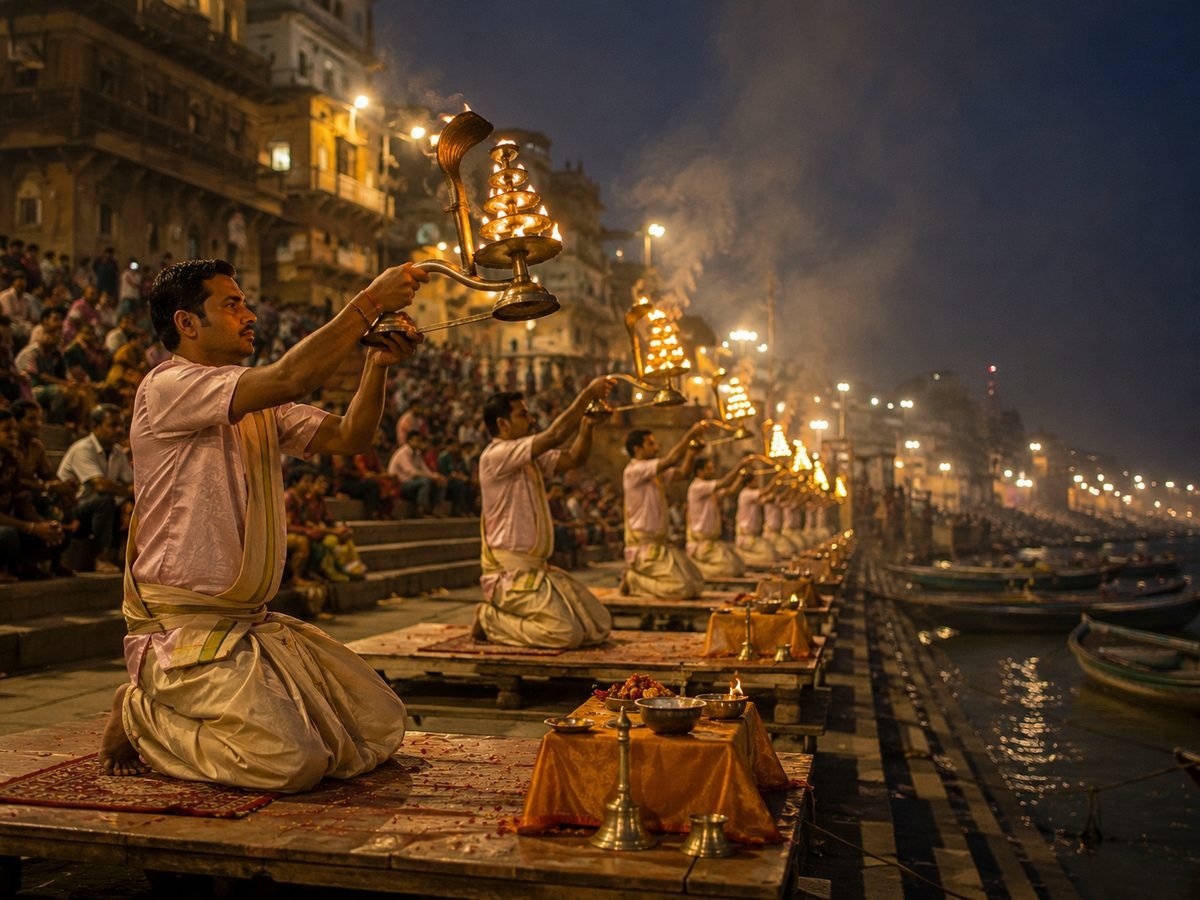
The Timing, Quickly
The evening aarti at Dashashwamedh Ghat generally begins around 6:45 PM in winter (October–March) and 7:00 PM in summer (April–September), running about 45 minutes. That's it — that's the part every guide repeats. What actually matters more is what follows.
The Real Decision: Steps, Boat, or Rooftop
Sitting on the steps (Dashashwamedh Ghat itself)
- Cost: Free
- Trade-off: You're at ground level, in a crowd, and unless you arrive early, your view will be partially blocked
- Best for: Budget-conscious visitors, or anyone happy to arrive very early for a clear sightline
A boat on the river
- Fair cost for a simple/shared boat: a modest, reasonable amount for the ceremony
- What's often advertised instead: a "premium front-row aarti boat" — priced considerably higher for what is, practically, a slightly better angle for the same 45 minutes
- Best for: The best overall view, if you avoid overpaying for the "premium" version
A rooftop or hotel balcony overlooking the ghat
- Cost: Varies — sometimes free if you're already staying nearby, sometimes a paid rooftop café
- Trade-off: Calmer, less crowded, but you lose some of the immersive, close-up feeling
- Best for: Older travelers, or anyone who finds crowds overwhelming
Our Honest Take on the Boat Option
If you do go for a boat, here's the detail most guides won't tell you: the best unobstructed view — where you can actually see all the priests performing in sync, not just the nearest one — comes from a boat positioned about 30 meters out from the ghat, arriving roughly 15 minutes before the ceremony starts.
You don't need the boat parked directly at the steps, and you don't need the most expensive "VIP" option to get this view. A simple, fairly priced boat positioned correctly will show you more than an overpriced one parked in the wrong spot.
Arrival Timing That Actually Matters
- At Dashashwamedh Ghat (steps): arrive 60–90 minutes early if you want to sit anywhere with a real view — this is the ghat everyone knows about, and it fills up
- At Assi Ghat: arrive 30–45 minutes early — smaller crowd, easier to find a spot
- By boat: timing matters less for crowd reasons, but arrive 15 minutes before for the best positioning on the water
A Calmer Alternative: Morning at Assi Ghat
If the evening crowd isn't for you, Assi Ghat hosts a morning aarti (sometimes called Subah-e-Banaras) — quieter, softer light, a completely different atmosphere from the evening's crowd and drums. Worth considering if you're traveling with elderly family members, or simply prefer stillness to spectacle.
Watching Respectfully
- This is a genuine act of worship for many people around you, not a photo backdrop — it's fine to take photos, but be mindful of those praying nearby
- Phone flashlights and flash photography can be distracting in a dim, ceremonial setting — most people turn them off once the aarti begins
- If you're offered a small floating diya (flower lamp) to release on the water, this is optional and lovely, not something you're obligated to buy from every vendor who approaches
- Modest dress is appreciated, though not strictly enforced — shoulders and knees covered is a safe default
What to Actually Bring
- A light shawl or jacket, even in warmer months — evenings by the river cool down more than you'd expect
- A small cushion or folding mat if you're sitting on the steps for the full 60–90 minute wait — stone gets uncomfortable fast
- Cash in small denominations — for a diya, a chai afterward, or a boat, exact change avoids the "no change" runaround
- A phone with good low-light capability if photography matters to you — a wide shot from a slight distance often captures the scene better than a zoomed-in one
When It Gets More Crowded Than Usual
A few dates draw noticeably larger crowds than a typical evening — particularly Dev Deepawali (the "Diwali of the Gods," usually in November, when the entire ghat is lit with thousands of lamps) and Kartik Purnima. If your trip happens to fall on one of these, arrive earlier than the timings above, or consider the boat option, since ground-level spots fill up especially fast. It's a genuinely spectacular time to visit — just worth planning around, not being surprised by.
A Few Questions People Often Ask
Does the aarti happen every single day, regardless of weather or season?
Yes — it's a daily ceremony, rain or shine, performed year-round. Heavy monsoon rain can occasionally shift the exact setup, but it's not cancelled.
Is it suitable for children or older family members?
Yes, generally — it's a calm, seated ceremony rather than something physically demanding. The main consideration is the crowd and wait time at Dashashwamedh specifically; a boat or Assi Ghat's quieter setting can make it more comfortable for either.
How long should I really set aside for the evening?
Including arrival, the ceremony itself, and a bit of time to soak it in afterward, plan for roughly 2 hours if you're doing it properly rather than rushing in and out.
The Honest Bottom Line
You don't need us to watch a beautiful Ganga Aarti — arrive at the right time, in the right spot, and it'll speak for itself. If you'd rather not think about any of this — timing, boats, where to sit — that's exactly the kind of thing we handle, so you just show up and watch.
Have a specific date in mind? We'll tell you what to expect that particular evening — no obligation.
Message Us on WhatsApp