Here's something most visitors never get told: almost every "ancient" temple you'll be shown in Varanasi isn't actually ancient. Kashi Vishwanath, Sankat Mochan, most of the big names — beautiful, sacred, deeply loved by millions, but rebuilt. In the 17th century, a large number of the city's original temples were torn down on the emperor Aurangzeb's orders. What stands today at most of those sites came later.
One didn't get rebuilt. Because it never fell.
A Temple That Simply Wasn't Touched
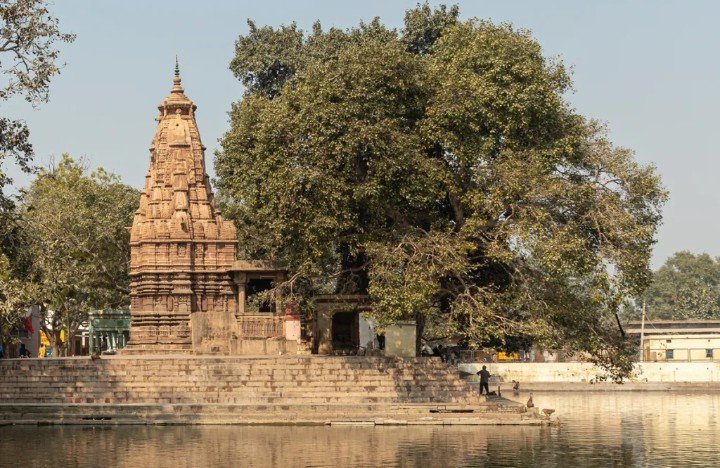
Tucked away in Kandwa village on the quiet southern edge of the city — nowhere near the ghats, nowhere near a tour bus route — stands the Kardameshwar Mahadev Temple. Historians and heritage researchers widely regard it as the only temple in Varanasi that survived the 17th-century destruction essentially intact. While everything else was being rebuilt from the ground up, this one just kept standing.
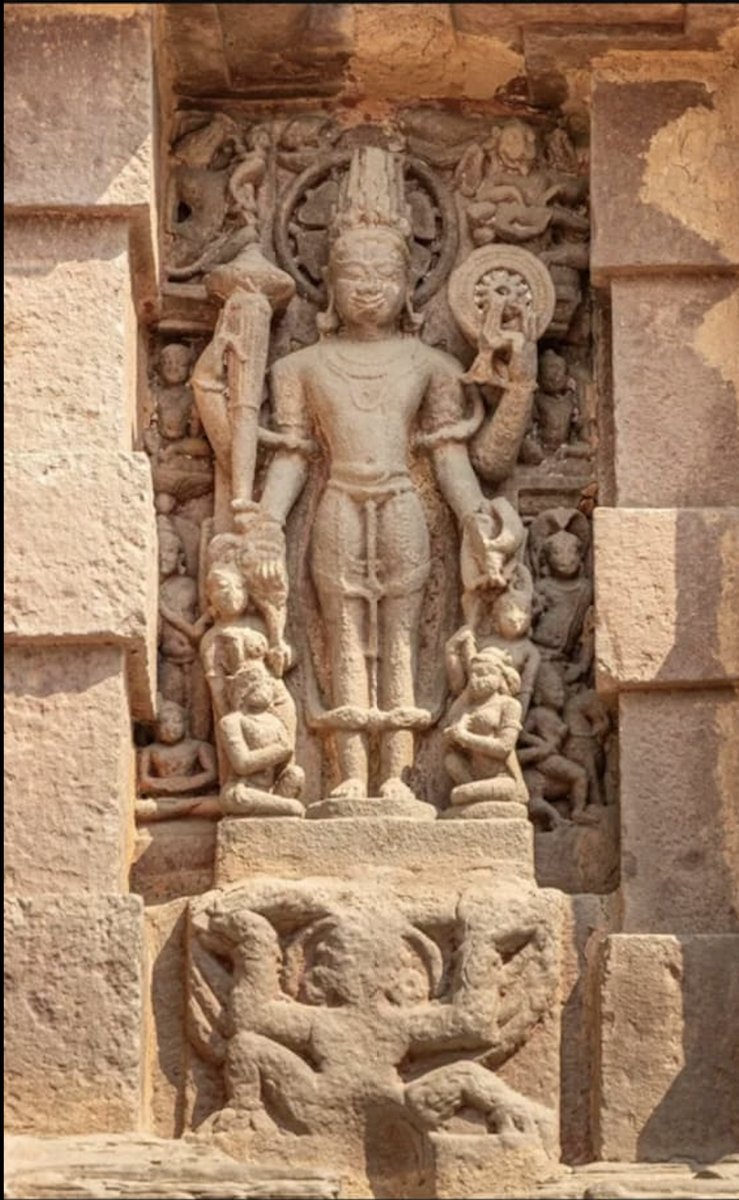
According to legend, the Shiva lingam here was installed by Sage Kardam, one of the earliest sages in Hindu tradition. That's the mythology. The archaeology backs up just how old this place really is: carved figures on the temple — dancers, musicians, mythical creatures, serpents — have been dated to the 6th–7th century CE, likely from the Gupta period. Most of what stands today was probably built during the 12th–13th centuries under the Gahadavala dynasty, with later alterations layered on top. Century upon century, and it's all still there, in one place.
How It Escaped — And Why That's Still a Mystery
Here's an honest admission most write-ups about this temple skip: nobody actually knows for certain why Kardameshwar survived when so many others didn't. The most repeated explanation is that it once sat inside dense forest on the city's edge, far enough from the center that it wasn't worth the trouble of finding. It's a reasonable theory — the temple still sits well outside the main city today. But even people who've researched this temple carefully and visited it in person will tell you plainly: the real answer remains unclear, even to historians.
What we do know is that its survival wasn't a one-time stroke of luck — it needed protecting more than once, in different ways, across the centuries. In the 1750s, Rani Bhavani of Bengal — a widowed queen who spent six years in Kashi restoring and funding water tanks and temples across the city — built the large stone tank beside it. She didn't stop there either: she funded tanks at several other stops along the same Panchakroshi pilgrimage route, of which this temple is only the first. And in the 20th century, the Uttar Pradesh government gave it formal legal protection under the state's Ancient Monuments Act.
So the honest version of this story isn't "one temple got lucky." It's that this temple has needed rescuing, again and again, in different ways — from a possible forest, from time, and now, mostly, from being forgotten.
What You'll Actually Find There
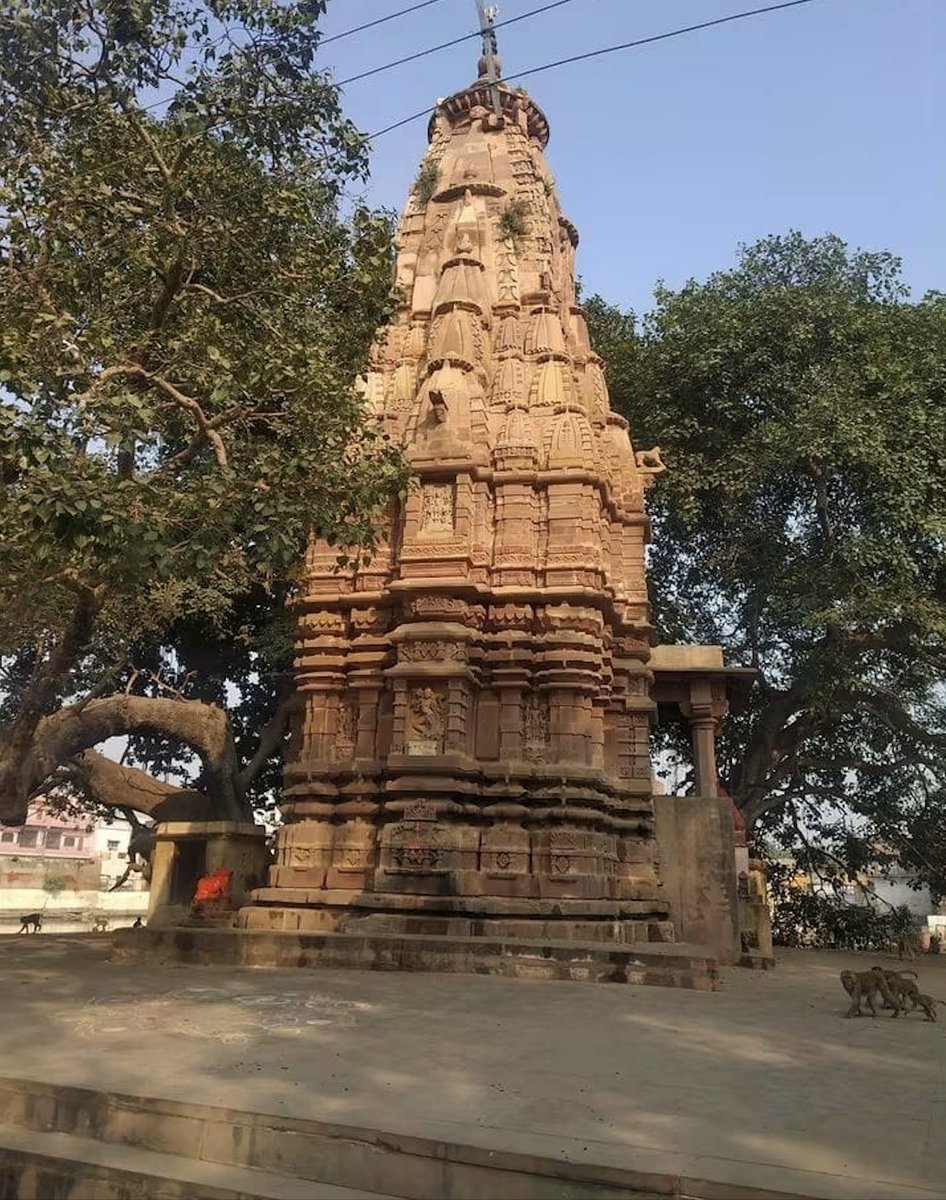
The temple itself is built in the Nagara style, with a distinctive beehive-shaped tower carved with kanguras (decorative crests) and depictions of Shiva, Vishnu, Devi, Ganesha, Surya, and the river goddesses Ganga and Yamuna. Right beside it sits Kardama Kund, a large rectangular water tank built in the 1750s by Rani Bhavani of Bengal, historically used by pilgrims for ritual purification before entering the temple.
There's also Kardama Kupa, a deep, circular well next to the temple. Local belief holds that seeing your own reflection in its water is a mark of protection and long life — a small, quiet ritual that has nothing to do with grandeur and everything to do with faith passed down without fanfare.
Its Real Job: The First Step of a 5-Day Walk
This temple isn't just an old building — it's a working stop on a living pilgrimage. The Panchakroshi Yatra is a roughly 88-km circumambulation of the entire city of Varanasi, traditionally covering 108 sacred sites over 5 days and nights. Kardameshwar marks the very first night's halt, followed by Bhimchandi, Rameshwar, and Kapiladhara on the nights after, before pilgrims return to Manikarnika Ghat where the journey began.
There's a quiet detail in how this pilgrimage works: pilgrims always keep the temples on their right hand and the resting places on their left as they walk — right symbolizing light, left symbolizing darkness — tracing out a sacred circle around the entire city. Pilgrims who've barely begun their journey rest here before continuing on, which means this "hidden" temple has quietly been at the center of one of Kashi's most demanding spiritual traditions the whole time.
So Why Has Nobody Heard of It?
Honestly? Because it doesn't try to be found. It sits in a residential village, well outside the main city, and has no ticket counter, no guides waiting outside, no souvenir stalls. Heritage conservationists have noted the site doesn't always get the upkeep a monument this significant deserves — which is its own quiet irony. The only surviving link to pre-Mughal Varanasi, and most people walking past the ghats every day have never heard its name.
That's not a reason to skip it. It's the reason to go.
Visiting Kardameshwar Mahadev Temple
- Where: Kandwa village, a few kilometers outside the main city of Varanasi
- Timings: Sunrise to sunset, daily
- Entry: Free
- Time needed: About an hour, unhurried
- Getting there: Confirm your auto-rickshaw driver actually knows Kandwa/Kardameshwar specifically before you set off — some drivers say yes and then stop repeatedly to ask locals for directions along the way. Sharing a map location, and budgeting extra time, saves real frustration.
Go early morning if you can. There's no crowd to beat here — just a temple that's been standing since before most of what you'll see in Varanasi even existed, waiting quietly for whoever bothers to show up.
Want to see a side of Varanasi almost no visitor gets shown? We can build this into your itinerary — no rush, no crowd, just the real history.
Message Us on WhatsApp